If you picture Miami Beach as an easy escape for part of the year, you are not alone. A condo here can work beautifully as a seasonal home, but the right fit depends on more than views and amenities. You need a plan that matches the island’s climate, condo rules, and neighborhood rhythm so your time here feels effortless instead of complicated. Let’s dive in.
Why Miami Beach works seasonally
Miami Beach naturally lends itself to part-time living because the experience changes throughout the year. According to NOAA climate normals for the Miami Beach station, January averages about 73.6°F for the high and 61.2°F for the low, while August averages about 88.1°F and 78.1°F.
That difference matters when you are deciding how and when you will use the home. Cooler winter weather can make seasonal stays especially appealing, while the warmer, wetter months call for more planning around property care and storm readiness.
Rainfall also shifts sharply by season. NOAA data shows monthly precipitation rising from 2.33 inches in January to 8.45 inches in September, which helps explain why your condo needs to function well even when you are away for part of the year.
Know the seasonal rhythm
Hurricane season affects ownership
In Miami Beach, seasonal ownership should always include storm planning. The city states that hurricane season runs from June 1 through November 30, and residents and visitors should prepare year-round.
Miami Beach also notes that low elevation, heavy rainfall, high tides, and storm surge can all create flooding. Miami-Dade identifies Miami Beach as a storm-surge planning area, which makes advance preparation especially important for anyone using a condo as a lock-and-leave property.
Rainy season changes day-to-day use
South Florida’s rainy season runs from May through October, according to the City of Miami Beach. The city also advises that rainy-season runoff can affect beach conditions after significant rain events.
For you as a seasonal owner, this does not mean avoiding Miami Beach. It means understanding that summer and early fall can feel very different from winter, both inside your condo and around the beach environment.
Winter and event season feel busier
Miami Beach is not static throughout the year. The city’s guidance around Art Week Miami Beach noted additional shuttles and heavier traffic during that week, especially near the Convention Center and related venues.
If you enjoy energy, culture, and a fuller social calendar, that can be part of the appeal. If you prefer a quieter seasonal routine, it helps to know that early December may feel much busier than a typical week.
Choose a condo for lock-and-leave ease
A seasonal home should be easy to secure, maintain, and reopen. In Miami Beach, that starts with choosing a condo and building that support simple ownership when you are not in residence.
Look beyond the finishes in the unit and focus on how the building operates. If you are away for weeks or months at a time, strong day-to-day management, clear building rules, and a practical maintenance plan become just as important as the view.
Building records matter
Florida condo owners have the right to inspect official association records such as the declaration, bylaws, rules, budgets, minutes, inspection reports, structural integrity reserve studies, and building permits. The Florida Department of Business and Professional Regulation says associations must make records available within 10 working days after a proper written request, and many associations must also post key documents online.
For a seasonal buyer, this is essential due diligence. These records can help you understand how the building is run, whether repairs are planned, and how financially prepared the association is for ongoing obligations.
Reserve funding matters too
For residential condominiums with buildings three habitable stories or higher, DBPR states that a Structural Integrity Reserve Study is required, and milestone-inspection-related obligations can also apply. For you as a buyer, the building’s reserve funding and repair plan are central to both ownership costs and long-term value.
A beautiful unit in a building with unresolved structural or funding issues may not support the easy seasonal lifestyle you want. This is one of the most important areas to review carefully before you buy.
Access and storm procedures count
Even when you are not renting your unit, building policies still affect your seasonal use. Florida condo guidance says boards have an irrevocable right of access for maintenance and can operate hurricane protections when needed to preserve the property.
The law does not specifically require an owner to give the association a key. Still, you should understand exactly how your building handles access, storm shutters or protections, maintenance entry, and emergency communication before closing.
Furnish for flexible living
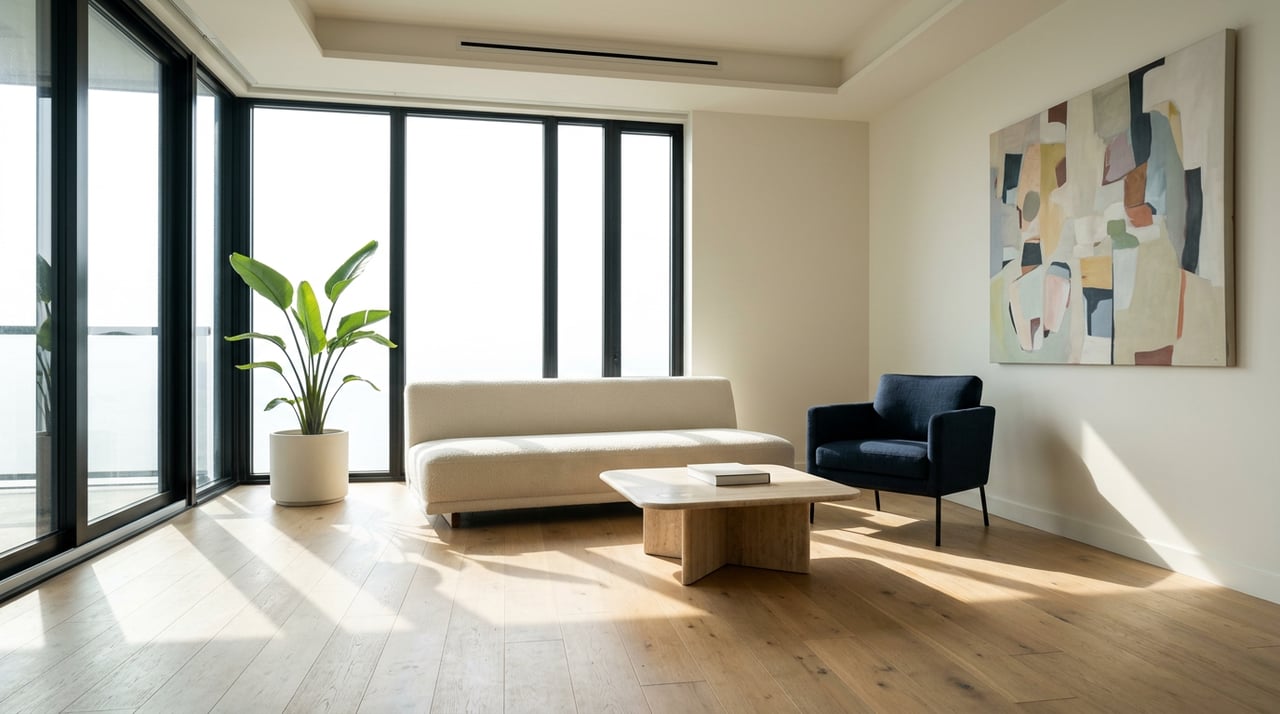
When a condo will be used only part of the year, the interior should support quick arrivals, easy departures, and low-stress upkeep. Miami Beach’s heat, humidity, rainy season, and flood profile all point toward a practical, durable approach.
This is where thoughtful design matters. A seasonal condo can still feel polished and luxurious while being easier to maintain between visits.
Prioritize durable finishes
In a part-time residence, materials should work hard without demanding constant attention. Durable surfaces, washable textiles, and closed storage are sensible choices for Miami Beach’s climate conditions.
That approach helps protect the look of the home while making it easier to close up the unit when you leave. It also supports a cleaner, calmer arrival when you return for the season.
Keep furniture flexible
Furniture that can be rearranged quickly works well in a seasonal condo. It gives you flexibility for guests, entertaining, or simply adjusting how you use the space over time.
A well-planned layout can also make a smaller footprint feel lighter and more functional. In a second home, that balance between beauty and ease is often what makes the property truly enjoyable.
Use a simple pre-departure setup
Miami Beach emergency guidance emphasizes having a plan, building a kit, and staying informed. For an absentee owner, that often translates into clear maintenance contacts, a pre-storm checklist, and someone who can inspect the unit after heavy rain or a storm.
A strong seasonal setup might include:
- Closed storage for linens and personal items
- Easy-to-clean upholstery and rugs
- A written departure checklist
- Reliable maintenance and inspection contacts
- Clear instructions for storm preparation
Understand Miami Beach rental limits
Some seasonal buyers plan to use the condo personally and rent it when they are away. In Miami Beach, you need to verify this carefully before assuming that is an option.
The city is highly restrictive on short-term rentals. Miami Beach states that short-term rentals under six months and one day are prohibited in all single-family homes and in many multifamily buildings in certain zoning districts, and approved short-term rentals require city authorization plus the required business tax and association approvals.
That means rental potential can vary sharply from one building or zoning district to another. If seasonal use with occasional rental income is part of your plan, the city rules and association rules should be reviewed early, not after contract.
Match the neighborhood to your routine
Miami Beach is one island, but it does not live like one uniform market. The city identifies three main areas for visitors and residents: South Beach, Mid Beach, and North Beach.
These areas are connected by the Beachwalk, and free trolleys connect neighborhoods across the island. That connectivity can make seasonal living easier, especially if you want flexibility without relying on your car for every outing.
South Beach, Mid Beach, and North Beach
Each section of Miami Beach brings a different rhythm. South Beach is often associated with the island’s more active and event-oriented energy, while Mid Beach and North Beach may offer a different pace depending on the block and building.
The key is not choosing the most famous area. It is choosing the part of the island that best fits how you actually want to live during the months you are in town.
Pay attention to event patterns
Art Week is a good example of how the local rhythm can shift. The city noted heavier traffic and added shuttles during that period, especially around the Convention Center and nearby venues.
For some owners, that seasonal buzz is a major plus. For others, it may mean choosing a location farther from the busiest event corridors.
North Beach has its own identity
The city highlights North Beach for its MiMo architecture and ongoing CRA projects. That helps position it differently from denser, more event-driven parts of the island.
If your goal is a seasonal retreat with a distinct neighborhood feel, this kind of area-by-area understanding can be just as valuable as comparing amenities inside the building.
What seasonal buyers should review
Before you move forward on a Miami Beach condo, keep your review focused on function as much as style.
Use this checklist as a starting point:
- Confirm how you plan to use the home by season
- Review building budgets, minutes, rules, and reserve studies
- Ask about milestone inspection or structural obligations where relevant
- Understand flood, storm, and access procedures in the building
- Verify whether any rental use is allowed by both the city and association
- Consider whether the neighborhood’s pace fits your routine
- Furnish with durable, low-maintenance materials in mind
A seasonal home should make life simpler. The right condo, in the right building, with the right setup, can do exactly that.
If you are considering a Miami Beach condo as a seasonal home, the smartest approach is to evaluate lifestyle, building health, and design function together. That is where a more thoughtful buying process can save you time and help you feel confident in your decision. To explore options with a design-aware, concierge approach, schedule a consultation with Priscilla Gonsalves.
FAQs
What makes a Miami Beach condo good for seasonal living?
- A strong seasonal condo usually offers easy lock-and-leave ownership, clear building rules, durable interiors, and a location that fits how you want to spend your time in Miami Beach.
What weather should seasonal owners expect in Miami Beach?
- Miami Beach has milder winter weather and hotter, wetter summer weather. NOAA climate normals show January averages of 73.6°F and 61.2°F, while August averages 88.1°F and 78.1°F, with rainfall increasing significantly by late summer.
What should buyers review in a Florida condo association?
- Florida buyers should review official records such as the declaration, bylaws, rules, budgets, minutes, inspection reports, building permits, and structural integrity reserve studies to understand how the building is managed and funded.
Can you rent out a seasonal condo in Miami Beach?
- Maybe, but only if both city rules and the association allow it. Miami Beach is highly restrictive, and short-term rentals under six months and one day are prohibited in many situations unless specific city authorization and approvals are in place.
Which part of Miami Beach is best for a seasonal condo?
- The best area depends on your preferred pace and routine. South Beach, Mid Beach, and North Beach each have a different feel, and the right fit comes down to how you want to live when you are in town.